NDIS Bathroom Renovation Adelaide: Eligibility & Funding
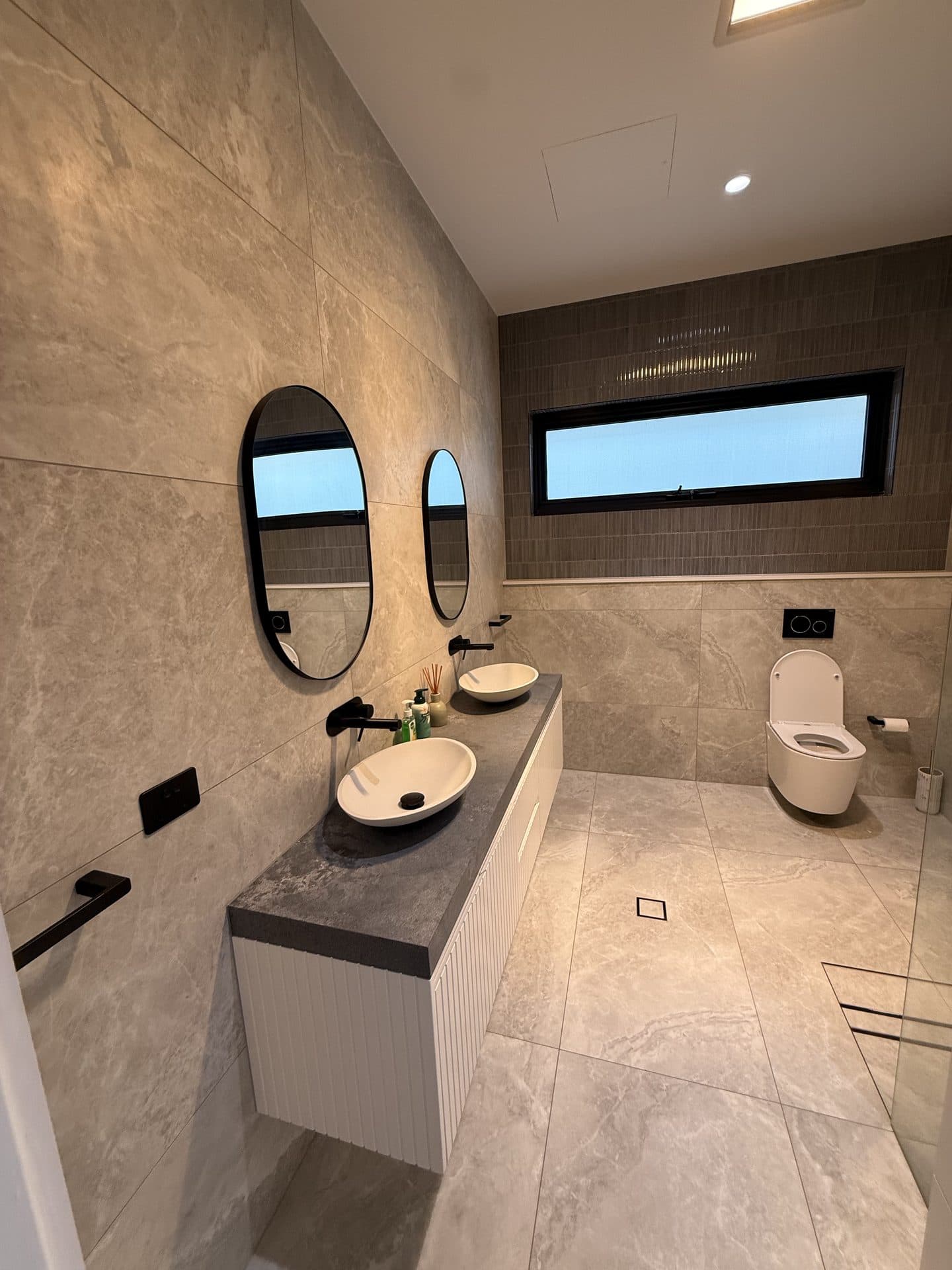
Bathroom modification is one of the most commonly funded categories under the NDIS for participants with mobility or accessibility needs. Understanding how the process works in South Australia makes the difference between a 12-week straightforward build and a 12-month runaround with your plan manager.
This guide walks through eligibility, the OT report, how plan funding approval works, typical Adelaide costs, the build timeline, and what an NDIS-compliant bathroom actually looks like on completion.
Is bathroom modification funded by the NDIS?
Yes, in specific circumstances. The NDIS funds supports that are ‘reasonable and necessary’ and that directly relate to a participant’s disability. Bathroom modifications commonly funded include:
- Level-entry (walk-in) shower replacing a stepped shower
- Grab rails positioned according to an OT report, rated for actual weight loading
- Accessible vanity with knee clearance for seated use
- Non-slip flooring meeting AS 4586 R10 or R11 wet-area rating
- Lever or sensor tapware for users with reduced hand strength
- Raised toilet height for users with mobility restrictions
- Turning circle expansion for wheelchair or walker access
What is not usually funded: general cosmetic renovation, stone benchtops, designer tapware beyond the spec required for safety, or upgrades that do not directly support the participant’s disability goals.
Eligibility: who qualifies
Any NDIS participant whose bathroom modifications are recommended by a qualified Occupational Therapist (OT) and support their plan goals is eligible. The core criteria:
- Active NDIS plan with relevant goals. Goals like ‘live independently at home’ or ‘maintain safety in the home environment’ are typically required in the plan text.
- OT assessment supporting the modifications. The OT must be registered, must assess the home environment, and must specify the modifications with reasoning tied to the participant’s disability.
- Home ownership or long-term tenancy. You need permission to modify the property. Rental properties require landlord consent in writing.
- Quotes that match the OT specification. Plan managers generally require two or three quotes on the same scope of works before approving.
The OT report: the document that drives everything
The OT assessment is the most important document in the whole process. It determines what is funded, what is not, and the design specification the renovator follows.
A comprehensive OT report for bathroom modification includes:
- Participant assessment: functional abilities, mobility, current daily living limitations
- Home environment assessment: current bathroom layout, access issues, risk factors
- Recommended modifications: specific fixtures, dimensions, and standards to meet
- Justification for each modification tied to the participant’s disability and plan goals
- Trial and review plan if specific products or configurations need testing
Adelaide OT fees for a home modification assessment typically run $450 to $1,200 depending on report detail. Most plans cover this as part of ‘Improved Daily Living’ or ‘Capacity Building’ funding.
Plan funding approval: what to expect
Bathroom modifications are usually funded under the ‘Home Modifications’ category. The approval pathway varies slightly depending on whether you are self-managed, plan-managed, or NDIA-managed.
NDIA-managed or plan-managed
Your plan manager submits the OT report and quotes to NDIA for approval. Expect 4 to 12 weeks for a decision. Complex or high-value modifications (over $25,000) may require a Housing Assistance Team review, adding time.
Self-managed
You handle the submission yourself via the NDIS portal. The paperwork is the same but you manage the timeline. Many self-managed participants still use a plan manager for home modifications because of the complexity.
Typical Adelaide NDIS bathroom costs in 2026
Typical price ranges for Adelaide NDIS bathroom work:
- Simple modifications (grab rails, non-slip flooring, lever tapware): $2,800 to $6,500
- Level-entry shower conversion only: $7,500 to $14,000
- Full accessible bathroom renovation: $18,000 to $35,000
- SDA-compliant bathroom (High Physical Support category): $35,000 to $75,000
The cost uplift versus a standard renovation of the same size is typically 10 to 25%, covering wall blocking for grab rails, slip-rated flooring, accessible fixture specifications, and the documentation NDIA requires.
The build timeline end-to-end
- Week 1-2: OT assessment and report
- Week 3-5: Quotes gathered from NDIS-registered Adelaide renovators
- Week 6-14: Plan approval process (variable)
- Week 15-17: Material ordering and scheduling
- Week 18-24: Build (typically 3 to 6 weeks)
- Week 25: Final compliance inspection and OT sign-off
The total timeline is often 6 months from first OT contact to finished bathroom. Most of that is waiting for plan approval, not the build itself.
Registered vs unregistered providers
Some NDIS participants are required to use registered providers (typically NDIA-managed plans). Others can use unregistered providers (plan-managed or self-managed plans). This affects which renovators can quote your project.
Tell us in your enquiry whether you need a registered provider, so we can pass it to a renovator who fits your plan.
Specialist Disability Accommodation (SDA) bathrooms
SDA is a specific housing category with strict design standards. SDA bathrooms must meet one of four design categories:
- Improved Liveability: high-spec accessible bathroom, not full SDA
- Fully Accessible: 1540mm turn circle, level entry, grab rails at specified positions
- Robust: impact-resistant finishes and reinforced fixtures for high support needs
- High Physical Support: ceiling hoists, full accessibility, medical support infrastructure
SDA bathroom renovations are more complex than general accessible renovations and require additional certification. Ask any renovator you’re considering which SDA categories they’ve built to.
Common mistakes to avoid
- Starting without an OT report. Most plans require the OT assessment before funding is approved. Working ahead costs you the ability to claim.
- Using a non-NDIS-registered renovator when your plan requires one. The work will not be reimbursed. Always confirm registration status upfront.
- Mixing private and NDIS-funded scope without clear documentation. If you want upgrades beyond the NDIS spec (e.g., designer tapware), get them itemised separately in the quote so the plan manager can see what is NDIS-funded and what you are paying privately.
- Not checking grab rail wall backing. Generic wall plugs into plasterboard fail under real load. Specify timber or steel wall backing rated to 200kg minimum at every grab rail location.
- Forgetting the turning circle. For wheelchair users, a 1540mm diameter clear turning circle must be inside the finished room, not including fixtures. Measure it after the vanity and toilet positions are set.
Get a quote for your NDIS bathroom
Send us your OT report scope and we’ll pass your enquiry to a local Adelaide renovator who does NDIS bathroom work. The service is free.