AS 3740: What Australian Waterproofing Standards Require
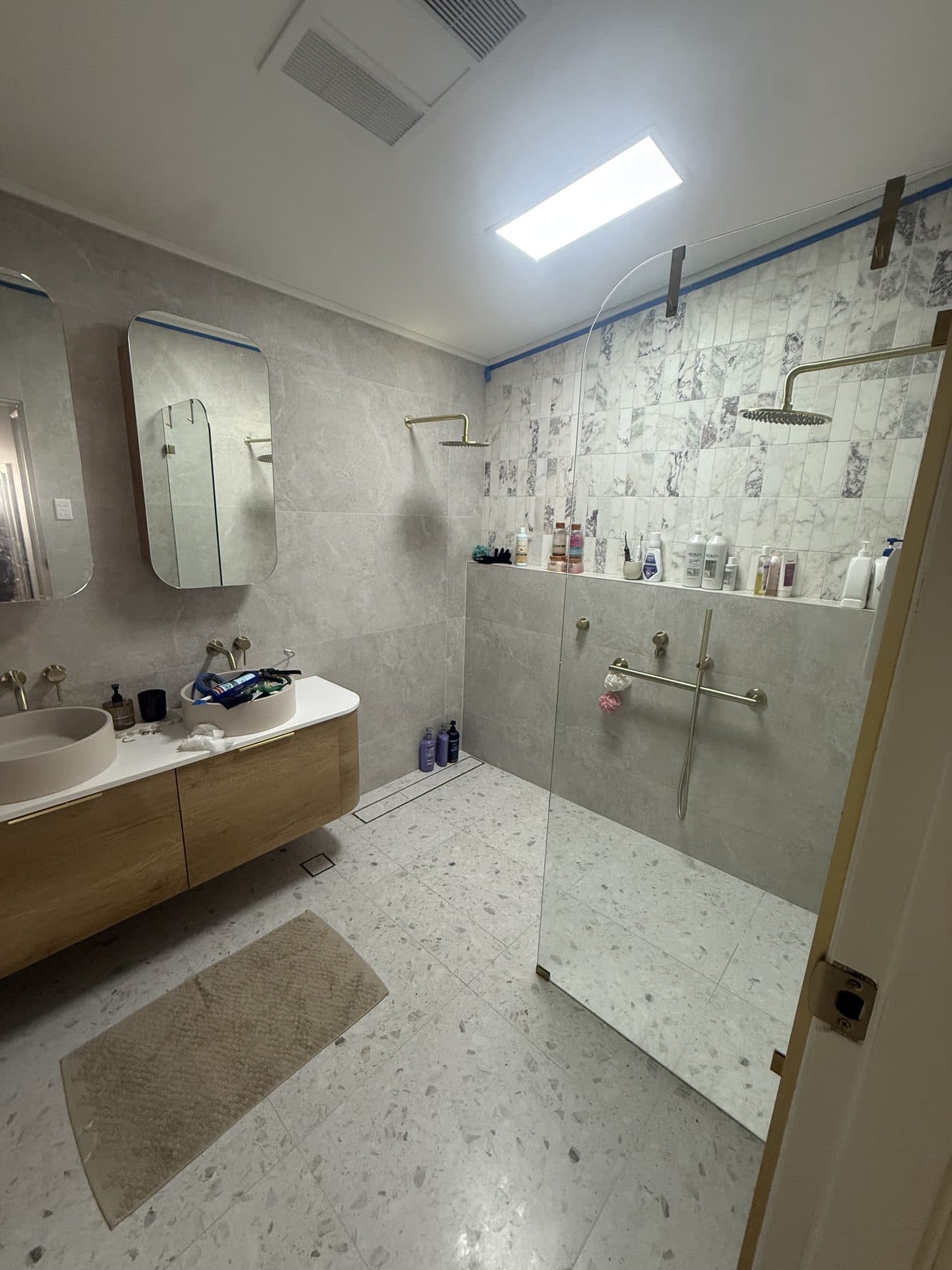
AS 3740 is the Australian Standard for Waterproofing of Domestic Wet Areas. It applies to every bathroom, ensuite, laundry, and WC in Australia. Your renovator must comply. Without compliance, the council will not sign off the work, and insurance claims for any future water damage can be denied.
This guide covers what AS 3740 actually requires, who is legally qualified to apply the membrane, what the compliance certificate proves, and the mistakes that most often cause Adelaide bathrooms to fail inspection.
What AS 3740 covers
AS 3740 specifies the minimum waterproofing required in any wet area of a residential bathroom. The standard covers four main dimensions:
- Membrane coverage. Where the waterproofing membrane must be applied.
- Substrate preparation. How the surface must be prepared before the membrane is applied.
- Bond breakers and flashings. How corners, junctions, and penetrations must be treated.
- Installer qualifications. Who can legally apply the membrane.
Membrane coverage: the minimum requirements
AS 3740 sets out minimum coverage zones. These are the floor coverage and wall heights that the waterproofing membrane must reach.
Shower area
- Floor: 100% coverage, extending 150mm up the wall on all sides
- Walls: minimum 1800mm above floor level on all shower walls
- At the shower door/entry: continuous membrane across the threshold
General bathroom floor
- Floor: 100% of the wet-area floor, extending 100mm up the wall at all perimeters
- Walls around the bath: minimum 150mm above the bath rim and 25mm behind the bath
Around plumbing penetrations
- Shower taps and shower heads: sealed flashing around the penetration, bonded to the membrane
- Floor waste drain: sealed collar around the drain, with the membrane terminating to the drain flange
- Basin and bath plumbing: sealed at the wall penetration
Substrate preparation requirements
The membrane is only as good as the surface it is applied to. AS 3740 requires:
- All wet-area walls sheeted with compressed fibre cement (minimum 6mm) or suitable substrate
- All joints taped and set with flexible compound
- No gaps, voids, or unsealed penetrations
- Surface clean, dry, and free of dust
- Primer applied per manufacturer specification before the membrane
Rushed preparation is where many failures start. If the substrate has gaps or weak joints, the membrane can stretch and tear at those points even if the membrane itself is applied correctly.
Bond breakers and flashings: the detail that matters
Bond breakers are thin strips of PE tape or similar that go at corner junctions (floor-to-wall, wall-to-wall) to allow the membrane to flex as the substrate moves. Without bond breakers, the membrane cracks at the corners, and the crack is invisible until it leaks.
AS 3740 requires bond breakers at:
- Every floor-to-wall junction in the wet area
- Every wall-to-wall internal corner in the shower
- Around bath edges where the bath meets the wall or floor
- At any expansion joint in the substrate
The installer applies the bond breaker strip, then the membrane overlaps it on both sides. Done right, the membrane can flex at the junction without tearing.
Who can legally apply waterproofing in Adelaide
In South Australia, only a person holding a Certificate II in Waterproofing (CPC31420 or equivalent) or a Building Work Contractors Licence with waterproofing endorsement can lawfully apply the membrane in a wet area. Additionally, SA’s Consumer and Business Services (CBS) licensing rules require the person performing the work to be properly insured.
The single most expensive mistake Adelaide homeowners make is allowing an unlicensed builder or handyman to apply the waterproofing membrane. Consequences:
- Council will not issue a certificate of compliance
- Future water damage claims can be denied by insurers
- Resale inspections flag it and buyers demand remediation
- Full bathroom waterproofing redo costs $3,500 to $6,500
Always ask for a waterproofing qualification number and insurance certificate before work starts. A good renovator hands them over as standard.
The three proven membrane systems
Three liquid-applied membrane systems dominate the Adelaide residential market:
Dunlop Solid Wet Area
Two-coat polymer-modified system. 10-year manufacturer warranty. Widely stocked, licensed applicators throughout Adelaide. Cost per square metre: about $40 to $55 supplied and applied.
Davco K10 Pro
Hybrid liquid and sheet system. Strong for high-risk areas like upstairs bathrooms. 10-year warranty. Cost: $50 to $70.
Ardex WPM 155
Premium liquid system with crack-bridging capability. 15-year warranty. Popular on luxury builds. Cost: $55 to $75.
All three meet AS 3740 when applied correctly. The choice is usually driven by the renovator’s preference and the project risk profile.
The compliance certificate: what it proves
After the membrane is applied and before tiling starts, the licensed waterproofer inspects the work and issues a Certificate of Compliance. This document:
- Identifies the waterproofer by name, licence number, and insurance
- Lists the membrane system used
- Confirms the work complies with AS 3740
- Includes photo records of key stages (primer, first coat, second coat, bond breakers, flashings)
- Provides the warranty terms from the product manufacturer
Keep this certificate with your property records. It is required for future insurance claims, pre-sale inspections, and compliance audits.
How to spot a failing waterproofing job before it goes wrong
The waterproofing is covered by tile and then by silicone. You cannot visually inspect the finished work. But you can watch the process.
Signs a waterproofing job is being done well
- Substrate is sheeted with proper compressed fibre cement and all joints taped
- Bond breaker strips are applied at every corner before the membrane
- The membrane is applied in two clear coats, each a different colour for visual verification
- Each coat is allowed to cure (usually 4 to 24 hours depending on the product) before the next
- The waterproofer returns for a final inspection with a moisture meter before the tiler starts
- The Certificate of Compliance is handed to you in writing
Signs a waterproofing job is being rushed
- Substrate has visible gaps or unsealed penetrations
- Bond breakers missing at corners (easy to spot: there should be tape strips visible before the membrane)
- Only one coat of membrane applied, or a very thin second coat
- No cure time between coats
- Tiling starts the same day as waterproofing (membrane needs at least 48 hours to cure)
- No certificate offered at end of work
What happens if waterproofing fails
Waterproofing failures are the most expensive common fault in Australian bathrooms. Remediation typically costs $3,500 to $18,000 depending on how long the leak went undetected and how much substrate and structural damage has occurred.
Common causes of waterproofing failure:
- Bond breaker missing at floor-to-wall junction (most common)
- Membrane applied too thin (single coat or thin double)
- Penetration not properly flashed around shower tapware
- Substrate movement caused by building settlement
- Physical damage during tiling that was not repaired
A licensed waterproofer with a current certificate protects you from all of these with a 10-year product warranty plus a 6-year workmanship warranty under SA residential building legislation.
Get a fixed-price quote that includes waterproofing
Ask for a quote that lists waterproofing as its own line, names the licensed waterproofer, and includes the AS 3740 compliance certificate at completion.